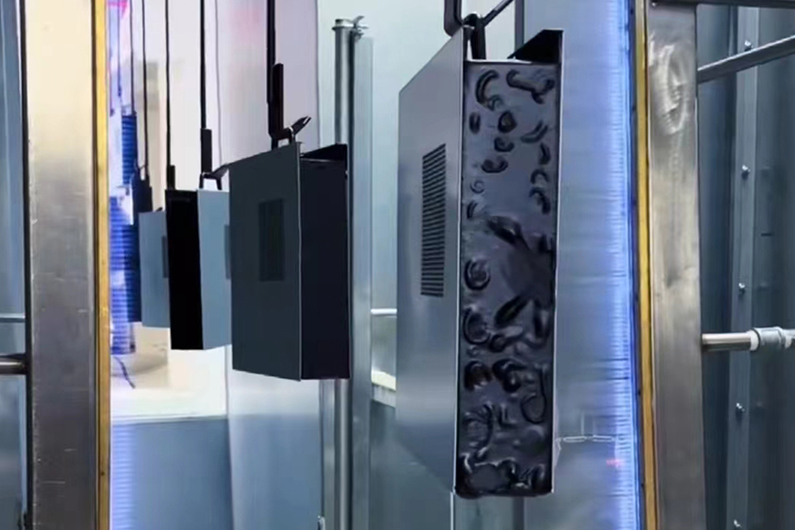
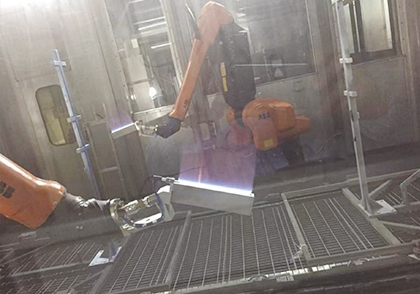
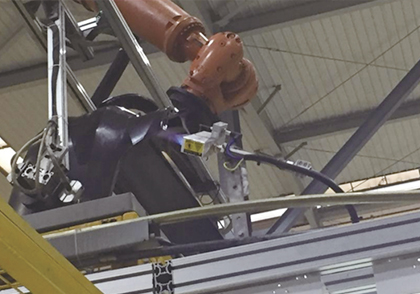
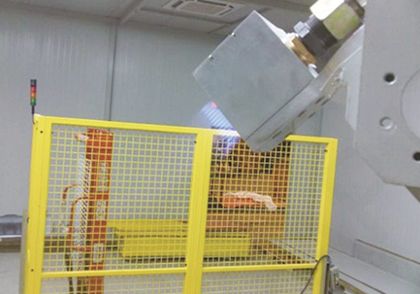
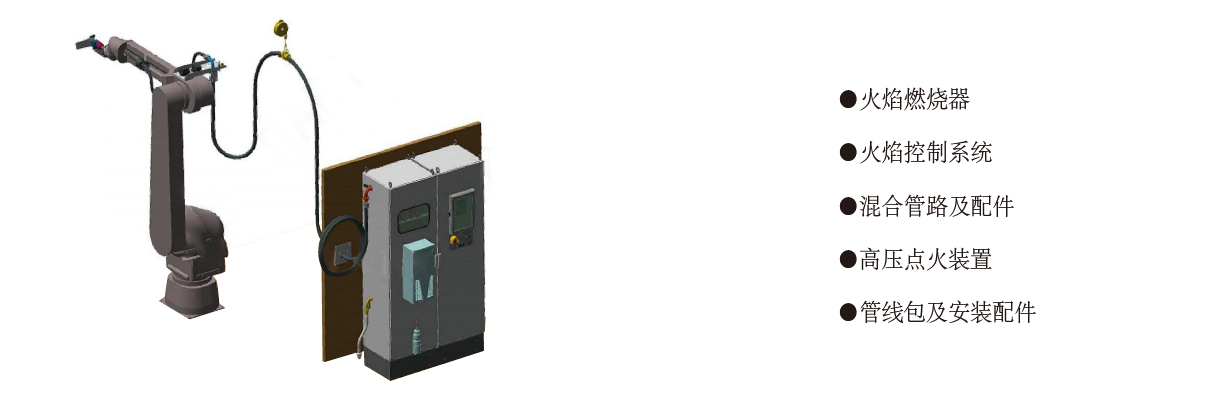
Flame treatment is the use of a specific burner, with a certain proportion of gas and air, to form an oxidation flame with a temperature of up to 1100 ℃~1300 ℃, instantly changing the surface properties of plastics,
In the actual processing process, the combustion state of the flame, the distance between the flame and the product, and the processing time are important factors that affect the processing effect.
Flame treatment is mainly used for surface deburring and cleaning of plastic parts.
The physical mechanism of flame treatment is to use a high-temperature flame to heat the surface of plastic parts at high temperatures, in order to remove surface oil stains and molding agents, and selectively remove low molecular weight substances and various amorphous components, making the plastic surface rough and porous, thereby improving the adhesion of the coating.
The chemical mechanism of flame treatment lies in the fact that flame treatment can be used to adjust the surface properties of plastics, causing large molecules on the surface of plastics to undergo oxidation reactions at high temperatures and produce polarity genes,
In addition, it also affects the structural morphology of surface molecule aggregation, causing water-based coatings to adhere to the plastic surface. The function of flame treatment is to generate hydrophilic components on the surface of plastics.


 产品特点
产品特点